Retinoids

The best retinoid serums, ranked by what the label actually states

We read six retinoid serums against their own labels. Three publish a strength. Three do not, and no amount of formulation talk makes up for it.

Prices and ingredient lists checked 2026-08-08. Every figure below is computed from the label facts in each product record, not copied from a brand's marketing.

How we scored

  1. 25 publishes pct Does the brand state how much retinoid is in the bottle. An unstated strength cannot be checked by anyone.
  2. 25 form and stability Which retinoid, how many conversion steps from retinoic acid, and whether the formula and pack protect it.
  3. 20 cost Price per millilitre, computed from the pack size the brand publishes.
  4. 20 formulation The supporting ingredients on the list, and what is missing from it.
  5. 10 dose clarity Whether the directions give a quantity anybody could measure.

Weights sum to 100. A brand that publishes no concentration scores zero on that axis whatever else it does well, because an unstated strength cannot be checked.

Six retinoid serums, read against their own labels on the same day. Three publish a strength and three do not, and that split does more work in the scoring below than any formulation argument, because a number a reader cannot check is not a number.

Two things are worth setting out before the table. Retinol and retinaldehyde percentages are not comparable figures, because they sit at different distances from the retinoic acid skin actually responds to. And no product here publishes a dose anybody can measure, so the cost per use column is empty for every single row. What fills its place is cost per millilitre, computed from the pack size and the price each brand publishes.

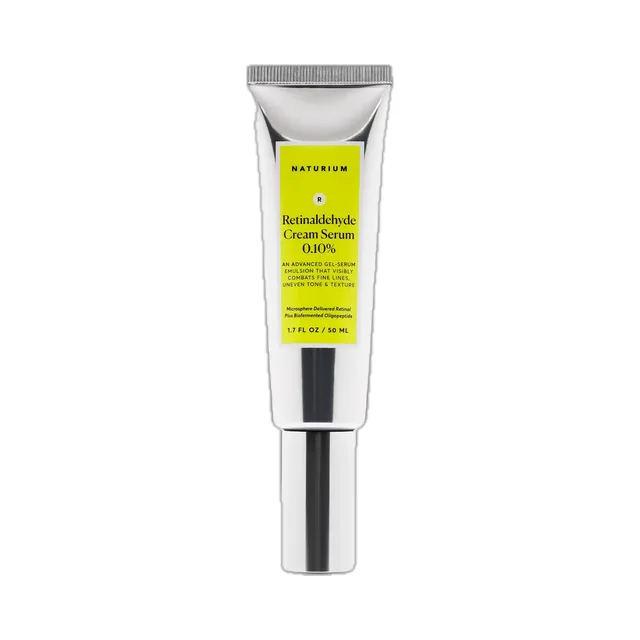
  1. Naturium Retinaldehyde Cream Serum 0.10%, the brand's own product photograph 01 Naturium
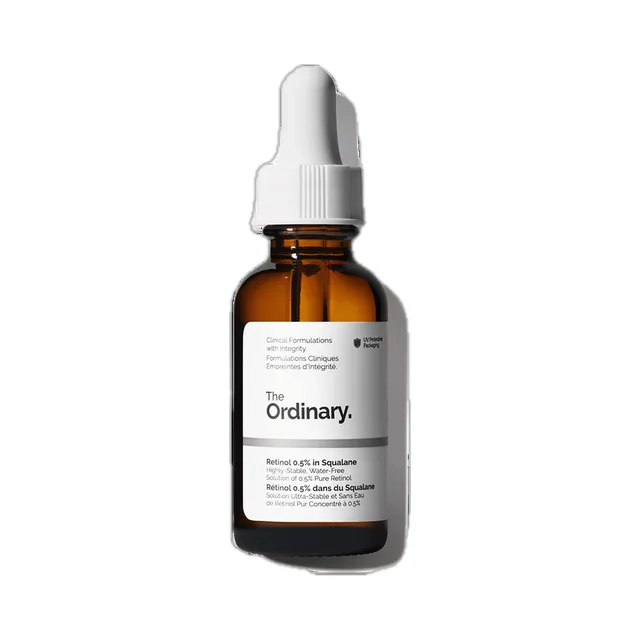
  2. The Ordinary Retinol 0.5% in Squalane, the brand's own product photograph 02 The Ordinary
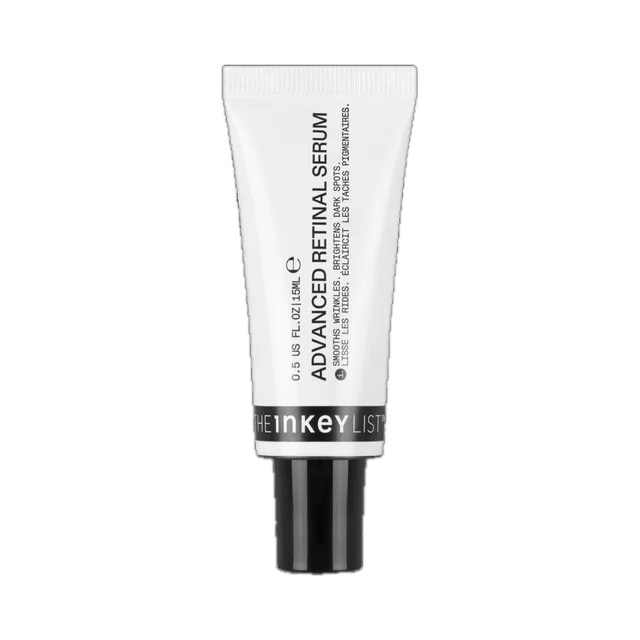
  3. The INKEY List Advanced 0.2% Retinal Serum, the brand's own product photograph 03 The INKEY List
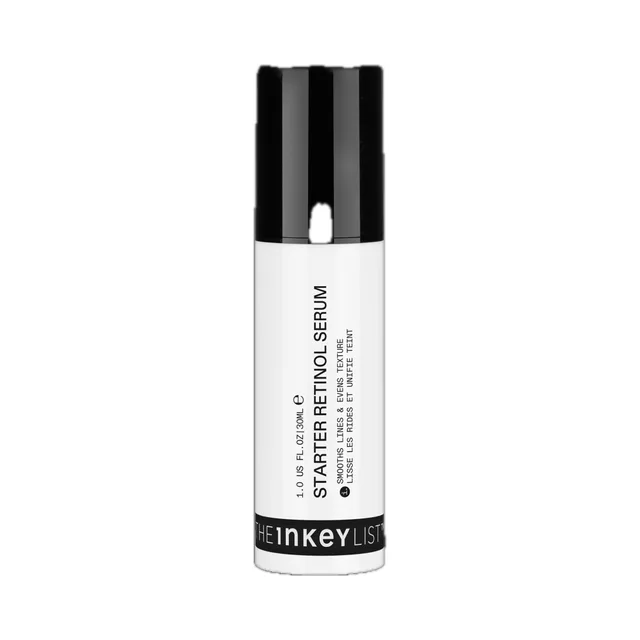
  4. The INKEY List Starter Retinol Serum, the brand's own product photograph 04 The INKEY List
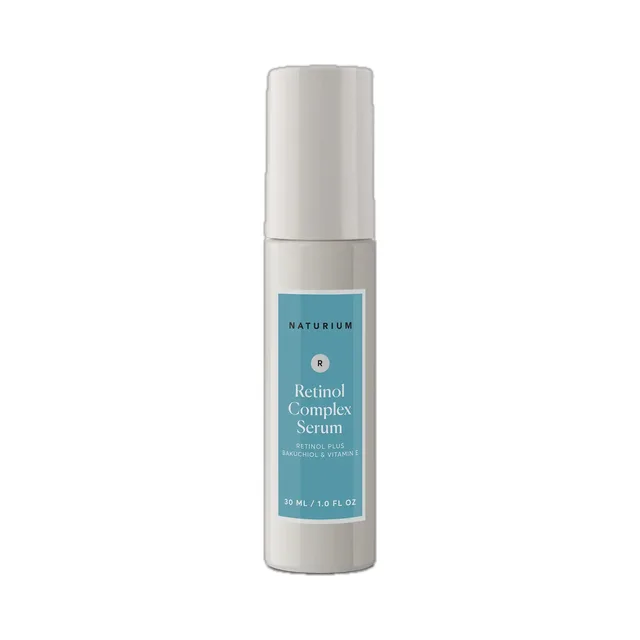
  5. Naturium Retinol Complex Serum, the brand's own product photograph 05 Naturium
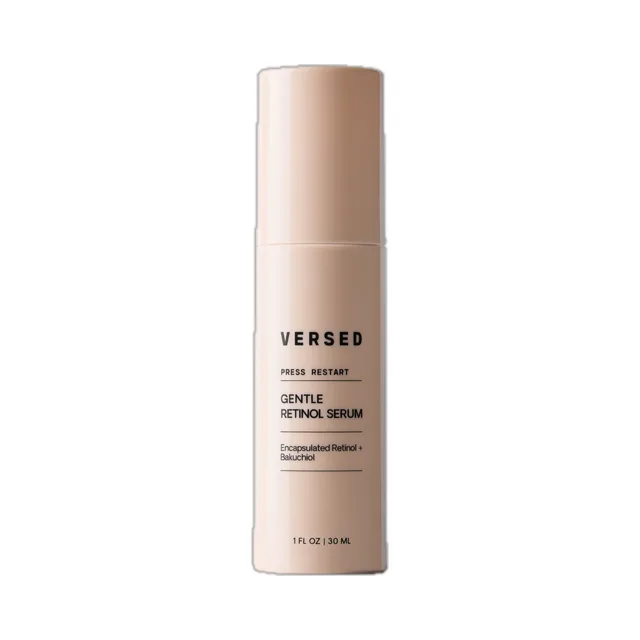
  6. Versed Press Restart Gentle Retinol Serum, the brand's own product photograph 06 Versed
Every shot is the brand's own product photograph, from the page each entry cites. They are scaled to fit a common frame, so they do not show the products at their real sizes relative to each other. The size column in the table does that.
The short version
Product Stated strength Form Size Price Cost per mL or g Cost per use Score
1. Naturium Retinaldehyde Cream Serum 0.10% 0.1%retinaldehyde, sustained release50 ml$32.00$0.64/mlNot computable79.5
2. The Ordinary Retinol 0.5% in Squalane 0.5%retinol in squalane, no water phase30 ml$9.30$0.31/mlNot computable76
3. The INKEY List Advanced 0.2% Retinal Serum 0.2%encapsulated retinaldehyde15 ml$22.00$1.47/mlNot computable67.3
4. The INKEY List Starter Retinol Serum Not publishedslow-release dual retinoid complex30 ml$15.00$0.50/mlNot computable42.5
5. Naturium Retinol Complex Serum Not publishedencapsulated retinol with bakuchiol30 ml$21.00$0.70/mlNot computable40.4
6. Versed Press Restart Gentle Retinol Serum Not publishedretinol with bakuchiol30 ml$19.99$0.67/mlNot computable40.3

01 Top pick Score 79.5

Naturium Retinaldehyde Cream Serum 0.10%

The only product here that publishes its strength, uses the shorter conversion path, and sells the same formula at three different strengths so the choice is yours rather than the brand's.

retinaldehyde

Retinaldehyde converts to retinoic acid in one step rather than two, so 0.10% here is not the tenth of a percent it looks like next to a retinol number. The brand publishes the figure, names the form precisely, and lists sodium metabisulfite, an antioxidant whose job is to keep the retinal from oxidising in the bottle. The directions cap use at two pumps daily, which is a real limit even though a pump volume is never published. At $0.64 per millilitre it is mid-priced in this set, and it is the only line here that lets a buyer step up from 0.05% to 0.15% inside one formula.

Holds up

  • Publishes the strength, and publishes it on three separate SKUs
  • Retinaldehyde, one conversion step from retinoic acid
  • Names an antioxidant whose purpose is protecting the active
  • The directions state a maximum rather than an amount to work up to

Does not

  • A pump is not a measurable unit, so cost per use is still not computable
  • No pH published, as with everything else in this set

Source 1

02 Best price Score 76

The Ordinary Retinol 0.5% in Squalane

Nine dollars thirty, a stated strength, a two-ingredient vehicle and nothing else to argue about. The cheapest millilitre here by a comfortable margin.

retinol

This is the plainest product in the set and the easiest to check. The strength is on the front, the vehicle is squalane with no water phase, and the price works out at $0.31 per millilitre, which is about half what the retinaldehyde products cost. Retinol is two conversion steps out rather than one, so this is a lower-intensity product than its 0.5% suggests next to a 0.1% retinal. What it does not do is pretend otherwise. The directions say a few drops, which is not a measurable dose, and that costs it on the last axis along with everybody else.

Holds up

  • Publishes the strength plainly
  • Anhydrous squalane vehicle, so no water phase for the retinol to sit in
  • $0.31 per millilitre, the cheapest here
  • Short ingredient list with nothing to unpick

Does not

  • Retinol, so two conversion steps rather than one
  • A few drops is not a dose anybody can measure
  • No antioxidant named on the list

Source 1

03 Score 67.3

The INKEY List Advanced 0.2% Retinal Serum

The highest stated retinaldehyde figure in the set, in the smallest bottle, at the highest price per millilitre by some distance.

retinaldehyde

At 0.2% this is the strongest published retinaldehyde figure here, encapsulated, and the brand states it clearly. The problem is the arithmetic underneath. Fifteen millilitres at $22 is $1.47 per millilitre, more than double the next most expensive product and nearly five times the cheapest. The pea-sized dose in the directions is the same non-unit everybody else uses. Worth noting for the record: the brand's own product feed listed this SKU at $15.00 on the same day its product page charged $22.00, and the page price is the one recorded here because it is the one a buyer pays.

Holds up

  • Highest published retinaldehyde percentage in the set
  • States encapsulation as the delivery approach
  • Clear, specific directions even if the dose is not a unit

Does not

  • $1.47 per millilitre, the most expensive here
  • Fifteen millilitres is half the size of most of this set
  • Brand feed and product page disagreed on the price on the day we checked

Source 1

04 Score 42.5

The INKEY List Starter Retinol Serum

A beginner retinol that publishes a percentage for its soothing ingredient and none at all for its retinoid.

retinol

This is the clearest example in the set of a brand choosing where to be precise. The page states 0.2% of a soothing complex by name, and says nothing about how much retinol is in the bottle. A dual-retinoid complex with slow release is a formulation description, not a quantity, and there is no way for a reader to check it. At $0.50 per millilitre it is fairly priced for a 30 millilitre serum, and the formula is plainly built for tolerance rather than intensity. It scores zero on the first axis because the brand demonstrated on the same page that it knows how to state a number.

Holds up

  • Reasonable at $0.50 per millilitre
  • Formula and directions both aimed at first-time users
  • Names the soothing ingredient and its percentage

Does not

  • No retinoid percentage anywhere on the page
  • Complex is a description, not a strength
  • Pea-sized dose, so cost per use is not computable

Source 1

05 Score 40.4

Naturium Retinol Complex Serum

The same brand that publishes three retinaldehyde percentages publishes none for this one.

retinol

Read next to the retinaldehyde line from the same brand, this product answers its own question. That line states 0.05%, 0.10% and 0.15% on three separate SKUs. This one states nothing, and the ingredient list puts retinol fifth, above the glycerin, alongside bakuchiol. It is a competent formula at $0.70 per millilitre, and it is the brand's own evidence that a percentage appears when it flatters and vanishes when it does not.

Holds up

  • Retinol sits high on the ingredient list, above the glycerin
  • Bakuchiol and murumuru butter suggest a tolerance-first build
  • Thirty millilitres at a mid-range price

Does not

  • No percentage, from a brand that publishes them elsewhere
  • Complex again describes a blend rather than a quantity
  • Apply an even layer is the vaguest direction in this ranking

Source 1

06 Score 40.3

Versed Press Restart Gentle Retinol Serum

Two pumps is the most specific direction in this ranking, attached to the least specific strength.

retinol

The directions here are better than anything else in the set: two pumps, in the evening, on almost-dry skin, with a stated minute of absorption before the next step. That is a real protocol. What is missing is the number it applies to. Retinol sits sixth on the ingredient list, after the silica, and no percentage is published. At $0.67 per millilitre it sits mid-set on price. If the brand published a figure it would move up this table immediately, which is the whole point of the first axis.

Holds up

  • The most usable directions in the ranking
  • Bakuchiol and sunflower oil suit the stated gentle positioning
  • Thirty millilitres in an opaque pump

Does not

  • No percentage published
  • Retinol sits sixth on the list, below the silica
  • A pump volume is not published, so two pumps is still not a quantity

Source 1

What we left out, and why

  • Paula's Choice 1% Retinol Treatment. The brand's site refused automated access on the day we checked, so its price and ingredient list could not be read from the source we cite. It will be added when it can be sourced the same way as everything else here.
  • Prescription tretinoin. A prescription product is obtained through a clinician and dosed by one. It is the reference point for this category rather than a shelf product a ranking can sort. See the glossary entry instead.

Questions readers send us

Is 0.1% retinaldehyde weaker than 1% retinol?
The numbers are not in the same units. Retinaldehyde converts to retinoic acid in one step and retinol takes two, so the percentages describe different molecules at different distances from the form skin responds to. Comparing them directly is the most common mistake in this category.
Why does the top pick not have the highest percentage?
Because a quarter of the score is about whether a brand states a strength at all, and another quarter is about form and stability. The highest published figure here sits in a 15 millilitre bottle at $1.47 per millilitre, and price is a fifth of the score.
Why is cost per use missing from every row?
Because no brand in this set publishes a dose anybody can measure. Pea-sized, a few drops and two pumps are not quantities, and no pump volume is published. We print cost per millilitre instead rather than invent a denominator.
Does encapsulated mean better?
It means the retinoid is wrapped in a carrier that releases it slowly, which brands use both to reduce irritation and to protect the molecule. Neither effect is measurable from outside the bottle, and no brand here publishes a release profile, so we score it as a stated formulation choice rather than a verified benefit.

References

  1. Zasada M, Budzisz E. Retinoids: active molecules influencing skin structure formation. Postepy Dermatol Alergol, 2019Accessed 2026-08-08
  2. Sorg O et al. Retinaldehyde: a new agent for cosmetic dermatology. Dermatology, 1999Accessed 2026-08-08
  3. Fluhr JW et al. Tolerance profile of retinol, retinaldehyde and retinoic acid. Dermatology, 1999Accessed 2026-08-08
  4. US FDA. Cosmetics labeling guide, ingredient declarationAccessed 2026-08-08